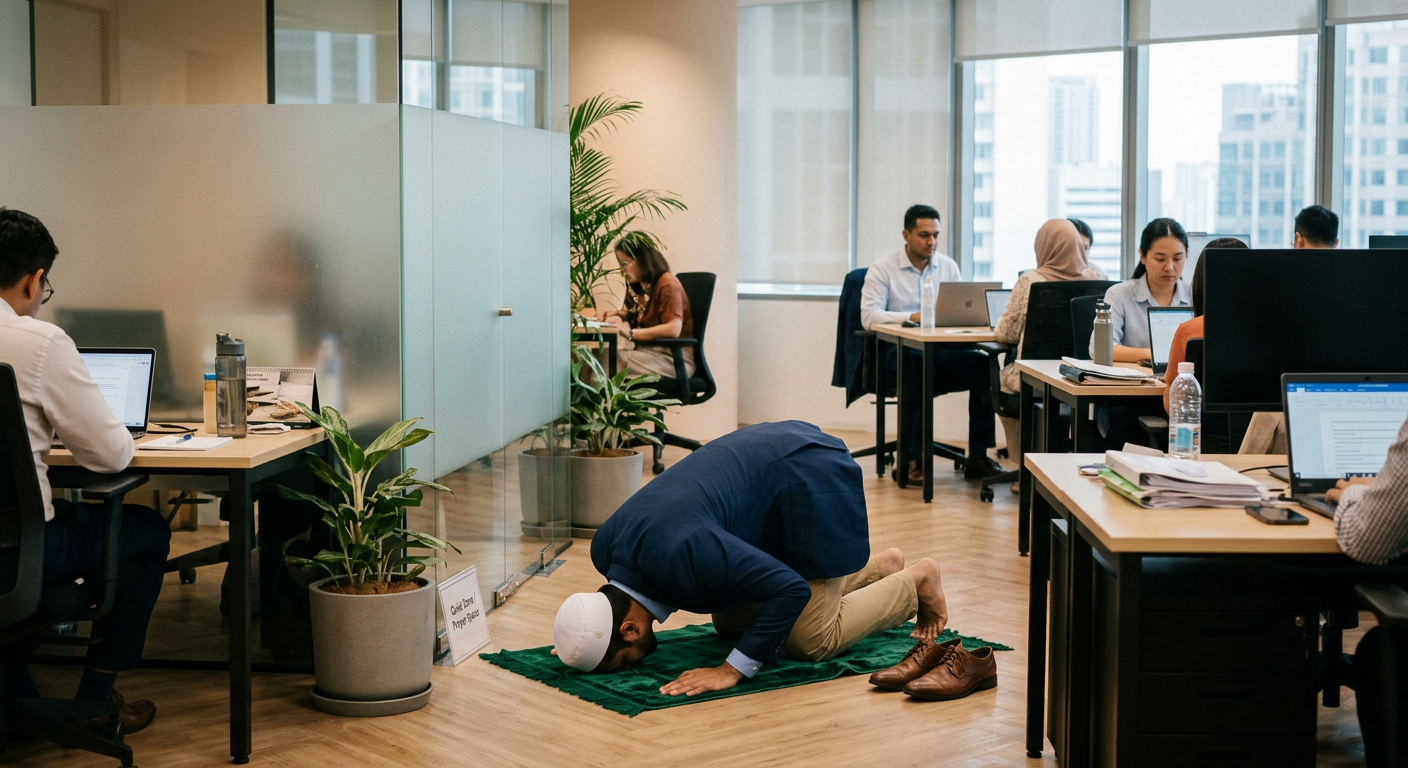
Meta Description: Learn how to find jobs that accommodate prayer breaks and maintain your salah while working. Practical tips for Muslim professionals seeking prayer-friendly workplaces.
Introduction
For practicing Muslims, maintaining the five daily prayers (salah) is a fundamental pillar of faith that cannot be compromised. Yet, many Muslim professionals face a significant challenge: finding employment that respects and accommodates their religious obligations. The question isn’t just “Can I find a job?” but rather “How can I find a job that allows me to pray on time?”
This concern is deeply rooted in Islamic principles. Allah (SWT) says in the Quran: “Indeed, prayer has been decreed upon the believers a decree of specified times” (Quran 4:103). The Prophet Muhammad (peace be upon him) also emphasized the importance of prayer, making it clear that it should not be neglected regardless of circumstances.
The good news is that with the right strategies, knowledge of your rights, and effective communication, you can find employment that respects your religious practices. This comprehensive guide will walk you through practical steps to identify prayer-friendly employers, negotiate accommodations, and maintain your salah without compromising your career aspirations.
Understanding Your Rights as a Muslim Employee
Legal Protections in the Workplace
Before diving into job search strategies, it’s crucial to understand that in many countries, religious accommodation is not just a courtesy—it’s a legal right.
In the United States: Title VII of the Civil Rights Act of 1964 requires employers with 15 or more employees to reasonably accommodate employees’ religious practices unless doing so would cause “undue hardship” on the business. This includes:
- Flexible scheduling for prayer times
- Break time for religious observances
- Modifications to dress codes or grooming policies
- Prayer space accommodations
In the United Kingdom: The Equality Act 2010 protects employees from religious discrimination and requires employers to make reasonable accommodations for religious practices.
In Canada: Federal and provincial human rights codes mandate accommodation of religious practices up to the point of undue hardship.
In Other Countries: Many nations have similar protections, though the specifics vary. Research your local labor laws to understand your rights.
What Constitutes “Reasonable Accommodation”?
Reasonable accommodations for prayer might include:
- Two to three short breaks (5-10 minutes each) for Dhuhr, Asr, and Maghrib prayers
- Flexibility during Jumu’ah (Friday prayer)
- A clean, quiet space for prayer
- Flexibility during Ramadan for adjusted schedules
Employers are generally not required to accommodate if it causes:
- Significant difficulty or expense
- Compromises workplace safety
- Infringes on other employees’ rights
- Reduces workplace efficiency substantially
Identifying Prayer-Friendly Employers
Research Before You Apply
Not all employers are created equal when it comes to religious accommodation. Here’s how to identify prayer-friendly workplaces:
1. Look for Diversity and Inclusion Statements Companies that genuinely value diversity often mention religious accommodation in their policies. Look for:
- Explicit mentions of religious diversity
- Employee Resource Groups (ERGs) for Muslim employees
- Multifaith prayer rooms or quiet spaces
- Flexible holiday policies that include Eid
2. Check Company Reviews Websites like Glassdoor, Indeed, and LinkedIn can provide insights:
- Search for keywords like “prayer,” “religious accommodation,” “Muslim,” or “diversity”
- Read reviews from current and former employees
- Look for patterns in feedback about work-life balance and flexibility
3. Investigate Company Culture
- Does the company have a diverse workforce?
- Are there Muslim employees in leadership positions?
- Does the company celebrate or acknowledge Islamic holidays?
- What is their track record on religious accommodation?
4. Industry Considerations Some industries are naturally more flexible:
- Tech companies: Often have progressive policies and flexible schedules
- Healthcare: Shift work can sometimes accommodate prayer times
- Education: Built-in breaks and understanding of religious observances
- Remote-first companies: Maximum flexibility for prayer schedules
- Islamic organizations and businesses: Naturally accommodating
Learn more about ethical employment practices that align with Islamic values and create inclusive workplaces.
Red Flags to Watch For
Avoid employers who:
- Have no diversity initiatives
- Receive complaints about religious discrimination
- Have rigid, inflexible policies with no exceptions
- Display hostility toward religious expression
- Have high turnover rates among minority employees
Strategies for Discussing Prayer Accommodations
When to Bring It Up
Timing matters when discussing religious accommodations:
During the Application Process:
- Pros: Shows transparency; avoids surprises later
- Cons: Might lead to unconscious bias in hiring
- Best for: Companies with clear diversity commitments
After Receiving a Job Offer:
- Pros: You have leverage; they’ve already chosen you
- Cons: Less time to negotiate; might create tension before starting
- Best for: Most situations; recommended approach
After Starting the Job:
- Pros: You can demonstrate your value first
- Cons: Might seem like you’re changing terms; could damage trust
- Best for: When you’re unsure about company culture
How to Frame the Conversation
Do:
- Be professional and confident
- Present it as a reasonable request, not a demand
- Emphasize your commitment to excellence
- Offer solutions, not just problems
- Reference company diversity policies if they exist
- Keep it brief and factual
Don’t:
- Apologize for your religious obligations
- Sound uncertain or defensive
- Make it sound burdensome
- Demand special treatment beyond reasonable accommodation
- Bring it up casually or without preparation
Sample Conversation Scripts
Script 1: During Offer Negotiation “Thank you so much for this offer. I’m excited about the opportunity to join the team. I wanted to discuss a small accommodation that would help me perform at my best. As a practicing Muslim, I observe five daily prayers that take about 5-10 minutes each. I would need brief breaks for Dhuhr and Asr prayers during work hours, and I’m happy to make up the time by staying later or working through lunch. Many of my previous employers have accommodated this successfully, and I’ve always maintained strong productivity. Is this something we could discuss?”
Script 2: After Starting the Job “I wanted to speak with you about maintaining my religious practices while ensuring I meet all my job responsibilities. I observe daily prayers that require short breaks. I’ve developed a system that minimizes disruption—[explain your plan]. I’m committed to ensuring this doesn’t impact my work quality or team collaboration. Could we discuss how to make this work?”
Addressing Common Concerns
Employer Concern: “We have a busy schedule and can’t spare the time.”
Your Response: “I understand the demands of the role. The prayers take only 5-10 minutes, and I’m committed to making up that time. In my previous position, I [share specific example of maintaining productivity]. I’m confident I can deliver excellent results while observing my prayers.”
Employer Concern: “Other employees might want similar accommodations.”
Your Response: “I appreciate that concern. My request is specific to my religious obligations, and I’m happy to keep it discreet. The accommodation is minimal and doesn’t set a precedent for extended breaks or reduced productivity.”
Employer Concern: “We don’t have a prayer space.”
Your Response: “I don’t require a dedicated prayer room. A clean, quiet space like an empty conference room, office, or even a corner would work. I can also use my break area if that’s acceptable.”
Practical Tips for Maintaining Salah at Work
Time Management Strategies
1. Know Your Prayer Times
- Use apps like Muslim Pro, Islamic Finder, or Pillars
- Set reminders 10-15 minutes before each prayer
- Check times weekly as they shift throughout the year
2. Plan Your Day Around Prayer Times
- Schedule demanding tasks outside prayer times when possible
- Use prayer breaks as natural reset points in your day
- Batch similar tasks to maximize efficiency
3. Maximize Break Efficiency
- Keep prayer supplies ready (prayer rug, wudu-friendly wipes)
- Know the quickest route to your prayer space
- Perform wudu efficiently before break time
- Keep prayers concise while maintaining quality
Finding Prayer Space
Ideal Options:
- Dedicated prayer/multifaith room
- Empty conference room
- Quiet office or storage room
- Clean break room corner
- Outdoor space (weather permitting)
Making It Work in Tight Spaces:
- Prayer rug defines your space
- Face the qibla even in confined areas
- Pray sitting if standing is impossible (though this should be rare)
- Use your car if necessary and safe
Handling Wudu (Ablution)
Challenges:
- Limited bathroom access
- Time constraints
- Water conservation concerns
Solutions:
- Use wudu-friendly facilities when available
- Keep travel wudu bottles or wipes
- Perform wudu efficiently (Sunnah method is quicker)
- Use dry wudu (tayammum) when water is unavailable or impractical
- Schedule longer wudu before known prayer times
Jumu’ah (Friday Prayer) Considerations
Friday prayer requires more time (30-45 minutes) and presents unique challenges:
Strategies:
- Request a longer lunch break on Fridays
- Make up time by arriving early or staying late
- Find a nearby mosque with quick sermons
- Carpool with other Muslim employees
- Propose a rotating schedule if multiple Muslim employees exist
Presenting to Employers: “Friday prayers are particularly important in Islam, similar to attending a weekly team meeting or training. I would need approximately 45 minutes once a week, which I’m happy to make up. This is a once-weekly commitment that allows me to maintain my religious obligations while remaining fully committed to my work.”
Industries and Roles Most Accommodating to Prayer
Highly Accommodating Sectors
1. Technology and Startups
- Flexible schedules
- Results-oriented culture
- Remote work options
- Progressive diversity policies
- Example roles: Software developer, UX designer, data analyst
2. Healthcare (Certain Roles)
- Shift work allows prayer time planning
- Breaks are already built into schedules
- Diverse workforce familiar with accommodation
- Example roles: Nurse, medical technician, pharmacist
3. Education
- Natural breaks between classes
- Understanding of religious observances
- Summer/winter breaks
- Example roles: Teacher, professor, administrator
4. Remote and Freelance Work
- Complete schedule control
- No commute time
- Prayer space at home
- Example roles: Writer, consultant, virtual assistant, designer
5. Islamic Organizations and Businesses
- Built-in accommodation
- Prayer facilities provided
- Understanding management
- Example roles: Any position in Islamic schools, mosques, halal companies, Islamic finance institutions
Moderately Accommodating Sectors
1. Corporate Office Jobs
- Varies by company culture
- Often has HR policies for accommodation
- May require more negotiation
- Example roles: Marketing, HR, finance, operations
2. Retail and Customer Service
- Can be challenging during peak times
- Shift work offers some flexibility
- Requires creative scheduling
- Best in larger chains with diversity policies
3. Manufacturing and Warehousing
- Structured break times
- May have limited flexibility
- Safety considerations
- Requires advance planning
Challenging Sectors (But Not Impossible)
1. Emergency Services
- Unpredictable schedules
- Critical response times
- Requires creative solutions
- May need to pray when possible
2. High-End Restaurants/Hospitality
- Peak times during prayer hours
- Customer-facing during busy periods
- Requires understanding management
- Best in back-of-house roles
3. Investment Banking/High-Finance
- Long, unpredictable hours
- High-pressure environment
- Client demands
- Requires strong negotiation skills
Creating Your Prayer Accommodation Plan
Step-by-Step Action Plan
Step 1: Assess Your Needs
- List which prayers fall during work hours
- Calculate total time needed (typically 15-30 minutes daily)
- Identify your ideal prayer space requirements
- Note any special needs (Jumu’ah, Ramadan)
Step 2: Research Potential Employers
- Create a target list of companies
- Research their diversity policies
- Look for Muslim employee networks
- Check reviews and ratings
Step 3: Prepare Your Proposal
- Draft your accommodation request
- Prepare responses to potential objections
- Gather examples of successful accommodations
- Practice your conversation
Step 4: Network Strategically
- Connect with Muslim professionals in your field
- Join professional Muslim organizations
- Seek mentors who’ve navigated this successfully
- Attend industry events to learn about company cultures
Step 5: Execute Your Job Search
- Apply to prayer-friendly companies first
- Tailor your approach based on company culture
- Time your accommodation discussion strategically
- Document all communications
Step 6: Follow Up and Maintain
- Once accommodated, exceed expectations
- Maintain open communication with supervisors
- Be flexible when business needs require it
- Express gratitude for accommodations
Documentation and Record-Keeping
Keep records of:
- Accommodation requests (email is best)
- Employer responses
- Any agreements made
- Instances where accommodation was denied or challenged
- Your work performance metrics
This documentation protects you if discrimination occurs and helps you refine your approach.
Special Considerations
Ramadan Accommodations
Ramadan presents unique challenges:
- Fasting affects energy levels
- Prayer times shift
- Taraweeh prayers at night
- Eid al-Fitr time off needed
Requesting Ramadan Accommodations:
- Give advance notice (2-4 weeks)
- Propose specific adjustments:
- Flexible start/end times
- Adjusted lunch breaks
- Temporary workload modifications
- Time off for Eid
Sample Request: “During the month of Ramadan, I will be fasting from dawn to sunset. I’d like to propose adjusting my schedule to [specific proposal] for the month. This will allow me to maintain my religious obligations while continuing to meet all my job responsibilities. I’m happy to discuss how we can make this work.”
Travel and Business Trips
Challenges:
- Unfamiliar prayer locations
- Tight schedules
- Client meetings during prayer times
- Finding halal food
Solutions:
- Research mosques and prayer spaces at destination
- Build prayer time into travel itinerary
- Communicate needs to travel companions
- Use apps to find prayer spaces and qibla direction
- Pack portable prayer rug and travel Quran
Career Advancement and Leadership Roles
As you advance in your career:
- You may have more leverage to request accommodations
- You can influence company policy
- You can mentor other Muslim employees
- You may need to balance more complex schedules
Leadership Considerations:
- Model work-life-religion balance
- Create inclusive policies for all employees
- Advocate for prayer rooms and flexibility
- Build diverse teams that respect differences
Success Stories and Case Studies
Case Study 1: Tech Professional
Situation: Sarah, a software engineer, joined a mid-sized tech company.
Challenge: Dhuhr and Asr prayers fell during core work hours.
Solution:
- Discussed accommodation after receiving offer
- Proposed using 15-minute breaks for prayer
- Offered to attend shorter meetings or work through lunch
- Found empty conference room for prayer
Outcome: Manager approved immediately. Sarah became one of the company’s top performers and later helped establish a Muslim Employee Resource Group.
Case Study 2: Healthcare Worker
Situation: Ahmed, a nurse, worked 12-hour shifts.
Challenge: Multiple prayers during shift with patient care responsibilities.
Solution:
- Coordinated with other Muslim nurses for coverage
- Used patient handoff times for prayer
- Kept prayer rug in locker
- Communicated schedule needs during hiring
Outcome: Hospital administration appreciated his proactive approach. The nursing department later implemented a formal prayer accommodation policy.
Case Study 3: Corporate Lawyer
Situation: Fatima, an attorney at a large firm.
Challenge: Billable hour requirements and client meetings.
Solution:
- Blocked prayer times on calendar as “focus time”
- Rescheduled non-urgent meetings around prayer times
- Used firm’s multifaith prayer room
- Made up time by working earlier/later
Outcome: Maintained strong billable hours and client relationships. Became advocate for religious accommodation firm-wide.
Resources and Tools
Apps and Technology
Prayer Time Apps:
- Muslim Pro
- Islamic Finder
- Pillars
- Athan
Productivity Tools:
- Google Calendar (block prayer times)
- Todoist or Trello (schedule around prayers)
- Focus apps (maximize work time)
Qibla Finders:
- Qibla Finder apps
- Google Maps qibla direction
- Compass apps
Professional Organizations
- Islamic Society of North America (ISNA)
- Muslim Professionals Network
- Local Muslim community organizations
- Industry-specific Muslim groups
Legal Resources
- Equal Employment Opportunity Commission (EEOC) – US
- Advisory, Conciliation and Arbitration Service (ACAS) – UK
- Local human rights commissions
- Islamic legal aid organizations
Frequently Asked Questions (FAQs)
Q: What if my employer refuses to accommodate prayer breaks?
A: First, ensure you’ve clearly communicated your needs and proposed solutions. If they still refuse:
- Document the refusal
- Review your legal rights
- Consult with HR or a higher-level manager
- Contact your local human rights commission or equal employment agency
- Seek legal counsel if necessary
- Consider whether this is the right workplace for you
Remember, in many jurisdictions, refusing reasonable religious accommodation is illegal unless it causes undue hardship.
Q: How much time do I actually need for prayer?
A: Each prayer typically takes 5-10 minutes:
- Wudu (if needed): 3-5 minutes
- Prayer itself: 3-5 minutes
- Total per prayer: 5-10 minutes
For three prayers during work hours, you’re looking at 15-30 minutes total daily. Jumu’ah requires 30-45 minutes once weekly.
Q: Can I pray at my desk?
A: While possible in some situations, it’s generally not ideal because:
- Prayer requires focus and reverence
- You need to face qibla
- Physical movements (standing, bowing, prostrating) require space
- Colleagues may not understand or may be uncomfortable
If no other space exists and your desk area is private and clean, brief prayers may be acceptable, but seek a dedicated space when possible.
Q: What if prayer times conflict with important meetings?
A: Try these strategies:
- Request meeting schedule adjustments when possible
- Pray before or immediately after the meeting if within the prayer window
- Perform abbreviated prayers if absolutely necessary (though this should be rare)
- Communicate with your manager about recurring conflicts
- Remember that prayer times have flexibility (Dhuhr starts after zenith and lasts until Asr)
Q: Should I mention my need for prayer accommodation in my resume or cover letter?
A: Generally, no. Your resume and cover letter should focus on your qualifications and fit for the role. Discussing accommodations at this stage could lead to unconscious bias. Wait until:
- You receive a job offer, or
- The interview process when asked about availability, or
- After you’ve started and established your value
Q: How do I handle coworkers who question my prayer breaks?
A: Handle with professionalism and education:
- Keep explanations brief and positive
- “I take short breaks for prayer, just like others take coffee breaks”
- Emphasize that you make up the time
- Don’t feel obligated to defend your religious practices
- If harassment occurs, document it and report to HR
- Lead by example through excellent work
Q: Can I be fired for taking prayer breaks?
A: In most countries with religious protection laws, no—not if you’ve requested reasonable accommodation and the accommodation doesn’t cause undue hardship. However:
- Document everything
- Follow proper channels for requesting accommodation
- Ensure you’re meeting job performance standards
- If terminated for religious reasons, consult an employment lawyer immediately
Conclusion: Balancing Faith and Career Success
Finding a job that allows prayer breaks is not only possible but increasingly common as workplaces become more diverse and inclusive. The key is preparation, professionalism, and persistence.
Remember these essential principles:
- Your faith is non-negotiable, but your approach can be flexible. There are often multiple ways to maintain your prayers while meeting job requirements.
- You have rights. Familiarize yourself with legal protections in your jurisdiction and don’t be afraid to assert them respectfully.
- Communication is crucial. Clear, professional dialogue with employers prevents misunderstandings and builds trust.
- Excellence is your best advocate. When you consistently deliver high-quality work, accommodation requests become easier to approve.
- You’re not alone. Many Muslim professionals have successfully navigated this path. Learn from their experiences and contribute to making workplaces more inclusive for those who follow.
- Trust in Allah’s plan. The Prophet Muhammad (PBUH) said: “And whoever fears Allah, He will make for him a way out and will provide for him from where he does not expect” (Quran 65:2-3).
As you embark on or continue your career journey, remember that maintaining your salah is not a barrier to success—it’s a source of strength, discipline, and barakah (blessing) that can enhance your professional life. Companies that value diversity and accommodate religious practices often have better employee satisfaction, retention, and performance.
Your commitment to prayer demonstrates reliability, time management, and integrity—qualities that make you a valuable employee. Don’t compromise on your deen; instead, find employers who will value you for who you are, faith included.
May Allah (SWT) grant you success in finding righteous employment that allows you to maintain your prayers, grow in your career, and serve as a positive ambassador for Islam in the workplace. Ameen.
Additional Resources
For more guidance on building a career that aligns with your Islamic values:
- Explore opportunities in Islamic finance, a rapidly growing sector that naturally accommodates religious practices
- Learn about halal certification processes and careers in this expanding industry
- Discover best practices for ethical employment practices that benefit both employers and Muslim employees
Disclaimer: This article provides general guidance and should not be considered legal advice. Employment laws vary by jurisdiction. For specific legal concerns, consult with an employment attorney or your local human rights commission.